Enter your neck, sleeve, height, and weight to estimate your dress shirt size.
Calculate Your Dress Shirt Size
Advertisement
How the Dress Shirt Size Calculator Works
Enter your neck circumference, sleeve length, height, and weight,
then select Calculate Dress Shirt Size. The calculator
uses your measurements to provide a practical starting size.
The result includes a numeric neck-and-sleeve size, a suggested fit,
and an approximate alpha size such as small, medium, large, or extra large.
Numeric dress shirt sizes normally show the collar measurement first
and the sleeve measurement second. For example,
15.5 × 34/35 generally means a 15.5-inch neck
and a sleeve intended for measurements around 34 to 35 inches.
For the Most Accurate Result
Use a flexible cloth measuring tape.
Keep the tape level and comfortably snug rather than tight.
Measure over a thin shirt or directly against the body.
Ask another person to take the sleeve measurement when possible.
Enter your actual measurements rather than the size printed on an existing shirt.
Dress Shirt Measurement Guide
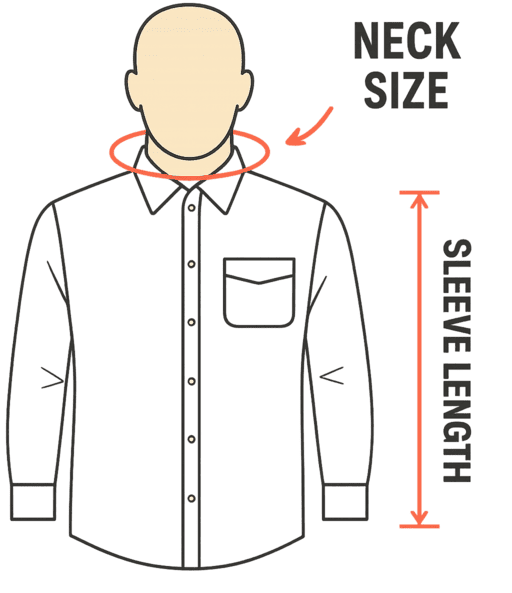
How to Measure Neck Circumference
Wrap the measuring tape around the base of your neck, just below
the Adam’s apple. Keep the tape level and leave enough space
to slide one finger between the tape and your neck. Record the
measurement to the nearest half inch or centimeter.
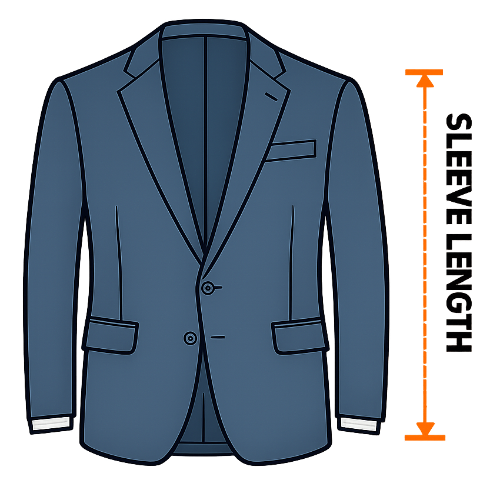
How to Measure Sleeve Length
Begin at the center back of your neck. Run the tape across the
shoulder, down the outside of your slightly bent arm, and stop at
the wrist bone. Keep the tape following the natural shape of your
shoulder and arm rather than pulling it in a straight line.
How to Measure Height
Remove your shoes and stand upright against a flat wall. Keep your
heels on the floor and look straight ahead. Measure from the floor
to the top of your head in feet and inches or centimeters.
How to Measure Weight
Place a reliable scale on a hard, level surface. Weigh yourself
without shoes and in light clothing, then enter the result in
pounds or kilograms according to the selected measurement system.
How to Read a Dress Shirt Size
Many dress shirts use a two-part numeric size. The first number
represents the collar or neck size, while the second number represents
the sleeve length. Some shirts group two nearby sleeve lengths into
one label, such as 32/33, 34/35, or 36/37.
Examples of common numeric dress shirt size labels
Example measurements
Example shirt label
What the label means
14.5-inch neck, 32-inch sleeve
14.5 × 32/33
14.5-inch collar with a sleeve range around 32 to 33 inches
15.5-inch neck, 34-inch sleeve
15.5 × 34/35
15.5-inch collar with a sleeve range around 34 to 35 inches
16-inch neck, 35-inch sleeve
16 × 34/35
16-inch collar with a sleeve range around 34 to 35 inches
17-inch neck, 36-inch sleeve
17 × 36/37
17-inch collar with a sleeve range around 36 to 37 inches
Some manufacturers sell exact sleeve lengths, while others use
grouped sleeve ranges or alpha sizes such as S, M, L, and XL.
How a Dress Shirt Should Fit
Collar
The collar should close comfortably without pressing into your
neck. You should generally be able to slide one finger between
your neck and the buttoned collar without leaving a large gap.
Shoulders
The shoulder seams should sit close to the edge of your natural
shoulders. Seams that fall down the upper arm usually indicate
that the shirt is too large, while seams pulled inward may indicate
that it is too small.
Sleeves and Cuffs
With your arms relaxed, the cuffs should reach around the wrist
bone. The sleeves should allow normal movement without pulling
tightly across the elbow or creating excessive fabric around the
forearm.
Chest and Waist
The button placket should lie flat without pulling or gaping. A
slim fit removes more fabric through the torso, while classic and
relaxed fits provide additional room.
Numeric Dress Shirt Sizes vs. S, M, L, and XL
Numeric sizing is normally more precise because it identifies a
collar measurement and a sleeve measurement. Alpha sizing combines
a wider range of measurements into one size, such as small, medium,
large, or extra large.
Tall or long alpha sizes may be used when a shirt needs additional
sleeve and body length. For example, a person may receive an
approximate result such as Medium Long instead of
standard Medium.
Dress Shirt Size Calculator FAQ
What measurements do I need for a dress shirt size?
Neck circumference and sleeve length are the most important
measurements for a numeric dress shirt size. This calculator also
asks for height and weight to help produce a more useful overall
fit estimate.
What does a shirt size such as 15.5 34/35 mean?
The first number is the collar measurement in inches. The second
part is the sleeve range, so 15.5 34/35 generally means a 15.5-inch
neck with a sleeve designed for measurements around 34 to 35 inches.
What does an alpha size such as Medium Long mean?
Medium describes the approximate overall shirt size, while Long
indicates that the shirt generally includes additional body and
sleeve length.
Should I round my neck measurement up?
Do not round down to a tighter collar. When your measurement falls
between available sizes, the larger collar size is generally the
safer starting point.
How tight should the measuring tape be around my neck?
The tape should be comfortably snug, not tight. Leave enough room
for one finger between the tape and your neck.
Why do dress shirt sizes vary?
Dress shirts can use different patterns, fit categories, collar
construction, sleeve groupings, and alpha-size conversions.
What should I do when my neck and sleeve measurements fall into different sizes?
Prioritize a collar that closes comfortably and a sleeve that
reaches the wrist correctly. Look for shirts offering separate neck
and sleeve combinations, or choose the closest size and consider
alterations.
This dress shirt size calculator provides a starting size estimate
based on the measurements entered. It cannot account for every
garment pattern, posture, shoulder shape, or personal fit preference.